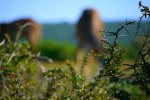
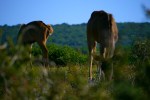
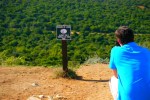
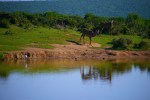
Day 14: Valley of Desolation


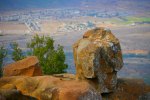
One of the geographical highlights at the Eastern Cape is the Valley of Desolation, which is today part of the Camdeboo National Park. The entrance can be reached by car from Graaff-Reinet in approximately ten minutes. From there on follows a steep road up into the mountains. The last 1.1 kilometres have to be done by foot from the parking lot towards the cliffs and along. The Valley of Desolation was declared a National Monument quite early in the 19th century, the first road towards the viewpoint was build in 1930.

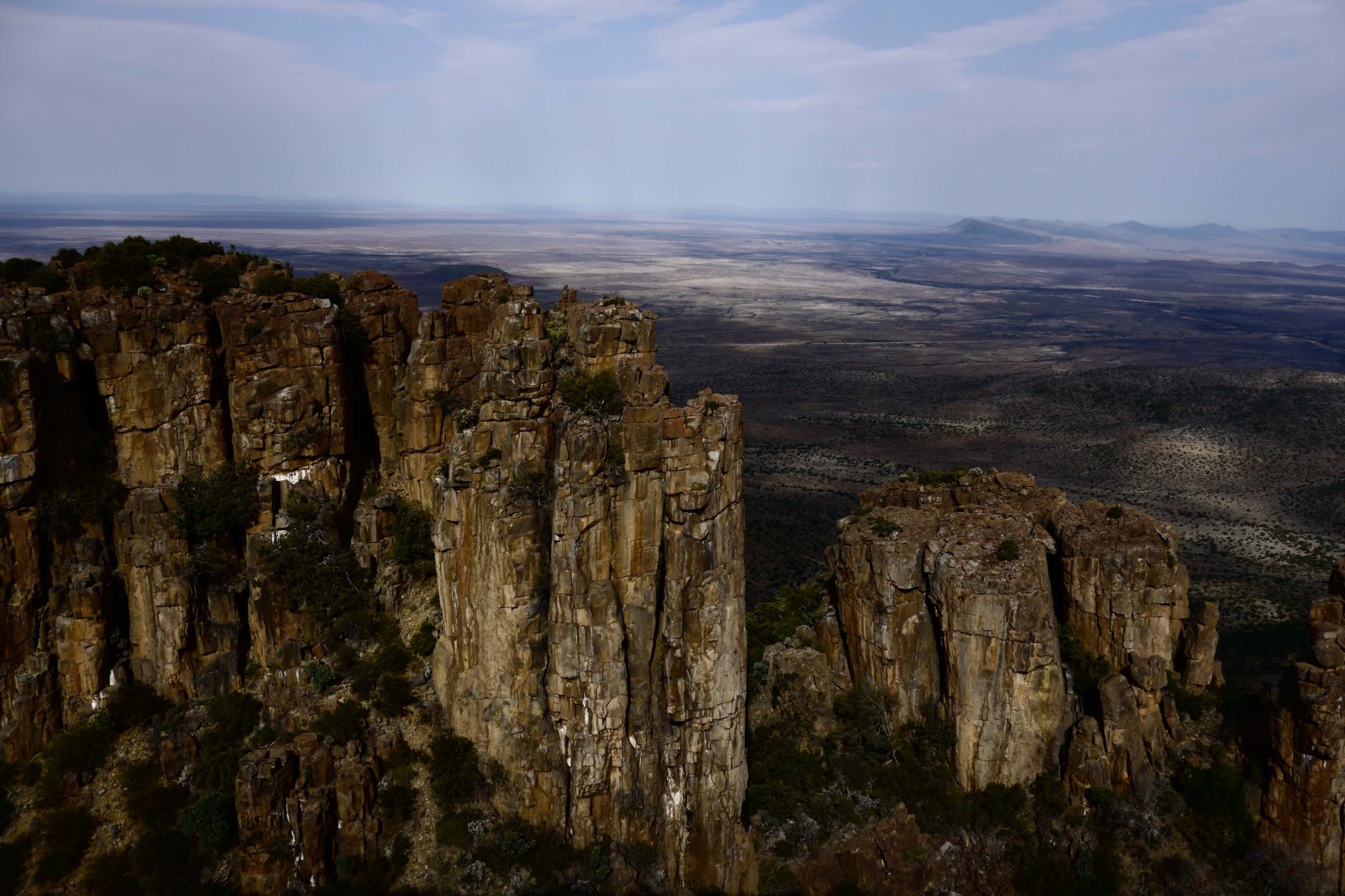
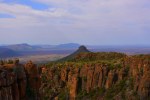
The viewpoint above the Valley of Desolation offers a stunning view over a flat plan landscape in which high piled dolerite columns reach into the air. In a period of over 100 million years volcanoes, the drifting apart of the pre-historic-continent Gondwanaland, rain and wind have created this surreal scene.

To experience the great view in its fullest I do recommend not only to walk the few hundred meters towards the viewpoint but afterwards to take a short hike along the 1.5 kilometres long Crag Lizard Trail. Good shoes and long trousers are necessary because the path is rocky and small, thorn bushes growing at its borders. Sometimes the path is not that easy to find, since game trails are crossing that can easily be mistaken for the hiking path. Naturally there are signs marking the trail, but they are not always there when you need them and some are hard to read due to weathering. The Crag Lizard Trail is a round path starting and ending at the parking lot. The highest point of the path is also the reward for hikers: Whoever gets there has a stunning view over the whole Camdeboo National Park and the karoo – in every direction – something that cannot be said about any other point on the road reachable by car.

More information: http://sanparks.org/parks/camdeboo/


—-

Einer der geographischen Höhepunkte am Eastern Cape ist das Valley of Desolation, das heute im Camdeboo Nationalpark liegt. In weniger als zehn Minuten ist der Eingang von Graaff-Reinet aus zu erreichen. Danach folgt eine teils asphaltierte Straße, teils staubige Piste bis hoch in die Berge. Der letzte knappe Kilometer  bis zum Klippenrand ist allerdings ein Fußweg.

Dort angekommen eröffnet sich der Blick über das gesamte Tal. Steinerne Riesen erheben sich vor der Weite der Halbwüste, roter Stein, dazwischen einzelne Büsche und Geröll. Entstanden in einem 100 Millionen Jahre langen Prozess, lag ihr geographischer Ursprung auf dem Urkontinent Gondwanaland, aus dem, als er zerbrach, Afrika, Südamerika, Australien, die Antarktis und Indien hervor gingen. Durch Vulkane, Wind und Wasser bildete sich die heutige Form der Valley of Desolation. Schon im 19. Jahrhundert erhielten die Steinformationen den Status als Nationalmonument, die erste befestigte Straße zum Aussichtspunkt ließ die Regierung 1930 errichten.

Wer allerdings die Aussicht richtig genießen will und halbwegs schwindelfrei ist, der sollte den 1,5 Kilometer langen Crag Lizard Trail entlang laufen. Lange Hose und zumindest Turnschuhe empfehlen sich, der Pfad ist steinig, holprig und an den Rändern mit dichtem Dornengestrüpp bewachsen. Auch ist der Weg trotz Beschilderung nicht immer einfach zu finden, da Wildpfade kreuzen. Am höchsten Punkt des Rundpfades eröffnet sich dann aber ein einmaliger Blick über den gesamten Camdeboo Nationalpark – eine Aussicht, die kein einziger anderer Punkt bietet, den Besucher mit dem Auto erreichen können.

Weiter Infos: http://sanparks.org/parks/camdeboo/


Day 13: Graaff-Reinet part two – from above and below

Driving up towards the Valley of Desolation a view point opens up towards a fantastic panorama over Graaff-Reinet. And that gives the impression the town is somewhat of a 18th and 19th century city planner’s dream. From above it can be seen how well-planned the city actually is. On one side the river flows along the town’s border, shaping the city centre in a horseshoe bend. Inside the river’s slope the streets are well structured jnto squares, the streets are wide with alleys and green parks.

This structure does actually not stop at the old city center’s borders but continues to the outskirts and the townships as well.

Driving into the city one realizes that development aid and housing projects have been at work here recently. But this apparently does not stop poverty. And since the town is comparably small this poverty spreads into the city centre. One of the nearest townships is not even a five minutes walk away. Therefore on every corner people are selling stuff, from headphones and sunglasses, to postcards, oranges or potatoes. Other simply do beg.

A friend had warned me she had never been asked for money as often as in Graaf-Reinet. I have to say I did not experience this that badly. But on the first evening I had twice such encounters where being polite and saying a firm no, did no longer go well hand in hand.

The fist one I call the postcard man. He was selling colourful paper postcards with pearls and wire shaped into the forms of South African wildlife. “Look, Rhino”, he said. “only ten rand, ten bucks.” Running with a box next to us he was quite eager and quite nice, but I simply did not need postcards. And in the same street at least two other men sat with their goods, looking if the postcard man was successfull and they may start their own attempt. “Tomorrow, you’ll buy tomorrow?” postcard man asked. “Yes, tomorrow.” I fear if I really meet him again tonight in town I might actually buy a postcard. They were indeed quite pretty and even though it might be strange if a man with a box of postcards is following you in the street, postcard man was quite nice and polite. “Tomorrow!” he said happily and left, waving his hand after us.

The second encounter was a bit more strange. A man with ten Rand in his hand asking for another ten so he can pay for electricity. Something that in South Africa can be bought in advance with a pre-paid card, which he was holding into our faces. I was not even sure if this was his normal tactic or if he really neded the money for electricity. In Germany I have often enough been asked for the last Euro someone was missing to buy a train or bus ticket home – strange he needed that every day. But it was not me or my boyfriend who said no to electicity man but a woman walking down the street shouting him down in Afrikaans. That actually felt strange…

So what am I trying to tell? You always can watch a city from above and below, literally speaking or in symbols. To enjoy something as a tourist attraction does not have to mean you have to ignore the – as the woman at the car hire station said – “you know, we have social problems”. And to be honest: Everyone I met was nice and polite but there are definitely some streets and corners I would not walk along after dark. And those begin a stone throw away from the main streets.

Tomorrow I will be leaving Graaff-Reinet, a town that has as much contradictions as any other South African town. Perhaps it is because the city is so small that you will be served all of that, history, culture, nature but also poverty and unemployment, on a plate without much chance to avoid it.

And I quite liked it for that.

—–

Wer von Graaff-Reinet die Berge hinauf fährt zum Valley of Desolation, der hat nach wenigen Kilometern einen wunderschönen Ausblick über die ganze Stadt. Und der wiederum eröffnet einem, warum die Stadt tatsächlich als der Traum eines Stadtplaners im 18. und 19. Jahrhundert gelten könnte: An der einen Seite begrenzt durch den Fluss, ist die Altstadt geformt wie ein Hufeisen. Doch darin entwickelt sich eine klare, quadratische Struktur, Straßen wie mit dem Lineal gezogen, breite Alleen und Parks. Ein Mustervorbild für schachbrettartig angelegte Städte.

Erstaunlich ist aber, dass sich die gleiche Struktur fortsetzt in die Außenbezirke ebenso wie in die Townships vor den Stadttoren.

Auf dem Weg in die Stadt wird deutlich, dass hier jüngster Zeit Gelder für Entwicklungshilfe und Hausbauprojekte geflossen sind. An vielen Stellen sind kleine und weniger herunter gekommene Backsteinhäuschen entstanden, die aber nicht weniger in Müll und Staub stehen, wie alle anderen Township-Baracken. Trotz solcher Hausbauprojekte existiert die Armut weiter.

Und gerade weil Graaff-Reinet so klein ist zieht sich die bis in die Innenstadt. Der nächsteTownship ist keine fünf Gehminuten entfernt. An jeder Ecke verkaufen Männer und Frauen Sachen, von Ohrwärmern und Kopfhörern über CDs und Sonnenbrillen zu Säcken mit Orangen oder Kartoffeln.

Ich wurde im Vorfeld gewarnt, dass Besucher in Graaff-Reinet an jeder Straßenecke nach Geld gefragt werden. Als so schlimm habe ich es dann aber nicht empfunden.

Eigentlich gab es bislang nur zwei Begegnungen, bei denen Höflichkeit und ein strenges eindeutiges Nein nicht mehr so ganz zusammen gingen.

Nummer 1 nenne ich den Postkartenmann. Er lief gute zehn Minuten mit einer Pappbox voller Postkarten neben uns her, die er mit aller Inbrunst bewarb. Bunt und mit Perlen und Drahtfiguren beklebt, zeigten sie die wilden Tiere Afrikas. “Guckt, ein Rhino”, sagte er und ließ sich auch durch ein Kopfschütteln nicht davon abbringen auch noch Löwe und Elefant zu zeigen. Gleichzeitig beobachteten uns mindestens zwei weitere Verkäufer wie erfolgreich der Postkartenmann wohl sein würde und ob es sich lohne uns auch noch anzusprechen. “Morgen, ihr kauft morgen, ja?” fragte Postkartenmann und war ganz glücklich als ich nickte. “Morgen!” rief er uns hinterher und winkte glücklich. Mag sein, dass ich heute tatsächlich eine kaufe – um ehrlich zu sein: sie waren sehr hübsch und Postkartenmann echt nett.

Die zweite Begegnung war etwas schräger. Was sagt man dazu: Ein Mann bittet um zehn Rand, zehn habe er schon, um seine Pre-Paid-Karte für Strom, aufzuladen. Das ist in Afrika nämlich durchaus üblich: Pre-Paid-Strom. Kann ein Trick sein, schließlich hatte ich in Leipzig auch meinen Pappenheimer, der mich alle zwei Tage um den fehlenden Euro für die Heimfahrt angepumpt hat, ohne zu merken, dass er immer die gleiche fragt. Konnte aber auch gut sein, dass Strommann tatsächlich nur zehn Rand fehlten, umgerechnet nicht einmal ein Euro. Bevor ich darauf aber überhaupt reagieren konnte, rief ihm eine Frau auf Afrikaans hinterher – auch wenn ich kein Wort verstanden habe, der Tonfall war alles andere als freundlich und Strommann verschwand. Das war ein seltsames Gefühl, nicht weil ich angebettelt wurde, sondern weil es mir noch nie passiert ist, dass jemand anders in meinem Namen einen Bettler anschreit…

Was ich eigentlich damit sagen möchte: Man kann eine Stadt immer aus verschiedenen Richtungen sehen, von oben und unten – symbolisch gesprochen oder wörtlich gemeint. Touristen-Attraktionen zu bestaunen, muss nicht unbedingt heißen die negativen Seiten einer Stadt zu ignorieren. Oder, wie die Dame es in der Autovermietung ausdrückte: “wir haben da soziale Probleme”. Eigentlich meinte sie damit Gewalt und Kriminalität. Um ehrlich zu sein: Es gibt Straßen in Graaff-Reinet, die würde ich nach Einbruch der Dunkelheit zu Fuß nicht mehr betreten. Und die beginnen gerade einmal einen Steinwurf entfernt von den Hauptstraßen.

Sicherlich hat Graaff-Reinet nicht mehr Widersprüche als andere Südafrikanische Städte, doch hier liegen sie so eng beieinander, dass sie kaum zu ignorieren sind: Wildparks und Naturschutz neben vermüllten Straßen, denkmalgeschützte Gebäude neben verwahrlosten Blechhütten.

Und vielleicht mag ich das an Graaff-Reinet: dass die Widersprüche hier nicht so leicht zu ignorieren sind, wie in anderen glatt gebügelten Touristenhochburgen.
Day 12: Graaff-Reinet part one

Even before arriving at Graaff-Reinet I wonder how anyone could ever have had the idea to settle there and to farm in the area surrounding the town none the less. From Port Elizabeth at the Eastern Cape it takes a three hours drive through the Karoo to reach Graaff-Reinet. A dry and waste land. Even though it is winter and the only time it is raining in the Karoo, the semi-desert is incredibly dry and hot. Our only companions are a few sheep now and then strolling through the bush and sometimes another car heading in the other direction or past us. At least the street is a modern one, in many parts recently resurfaced. 120 kilometers per hour are allowed and keeping to that speed is apparently far too slow for many South Africans heading past.

20130712-195938.jpg

Graaff-Reinet is one of the oldest towns in South Africa, founded in 1786 as a supply centre for the farms in the region and as a safe place againt Xhosa attacks. Today no more than 33.000 people live there, so it is easy to imagine how small the town centre actually is. But even though it is one of the historic pearls of South Africa.

20130712-194621.jpg

Since we had been on the road all afternoon we decided to have an early dinner. And there I met the Karoo sheep again, or better a tiny little lamb on my plate. Karoo lamb is one of the specialities of the region and I actually have to say: It was the best lamb I have ever eaten.

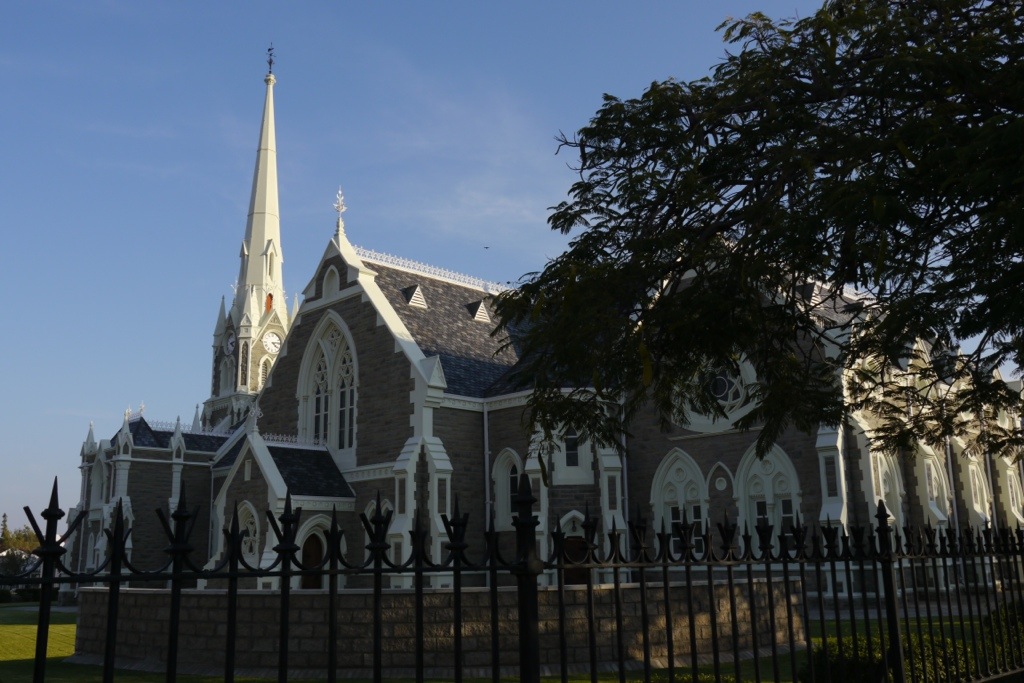
We had our lamb in the Coldstream restaurant next to the cathedral. The building is the old Graaff-Reinet club founded in 1875 a long time an only male domain. Today it is the second oldest club of its kind still operating – women allowed. In the bar area you can even find some bullet holes in the wall from the Boer war.

While we sat in an historic place, outside in a beautiful garden, the music was lets say, not very historic. There I was, travelled to the other side of the earth and listening to “Modern Talking”, a German band from the 1980s that always causes me a slight allergy.

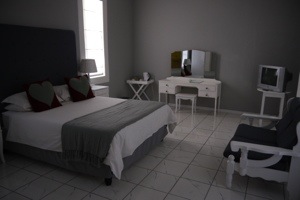
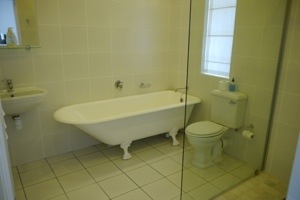
Now I am back in our bed and breakfast. Booked on short notice this morning it came as a surprise: Not only the cost of barely 50 Euro a night but also because it is quite beautiful – a private accommodation in one of the old houses from the 19th century, but with a modern twist, pool and luxurious interior.

20130712-192352.jpg

20130712-192405.jpg

While you are reading this text I opened up a bottle of wine: And that is the plan for the evening. Tomorrow will be time to discover the Valley of Desolation.

—–

Noch bevor wir überhaupt in Graaff-Reinet ankommen, frage ich mich, wie überhaupt jemals jemand auf die Idee kommen konnte dort zu siedeln und tatsächlich in der gesamten Umgebung Viehzucht zu betreiben. Von Port Elizabeth am Eastern Cape dauert es knapp drei Stunden Graaff-Reinet im Hinterland zu erreichen, ein Trip mit dem Auto quer durch die Karoo. Zwar ist gerade Winter und damit Regenzeit in der Halbwüste, doch es ist nichts desto trotz unglaublich heiß und trocken. Gelbes Gras und hüfthohe Sträucher bilden die Hauptvegetation, dazwischen Kakteen und an Wasserläufen einige wenige Bäume. Unsere einzige Begegnung auf der Straße sind einige Schafe, die hier und da im Gestrüpp grasen und wenige Autos, die uns entgegen kommen oder uns überholen. Die erlaubten 120 Stundenkilometer sind vielen Südafrikanern scheinbar zu langsam. Immerhin ist die Straße gut ausgebaut und an vielen Stellen erst vor kurzem saniert.

Graaff-Reinet ist die viertälteste Stadt in Südafrika, 1786 gegründet als Außenposten, nicht nur um die umliegenden Farmen zu versorgen, sondern auch als Stützpunkt gegen Angriffe der dort lebenden Xhosa Stämme. Mit gerade einmal 33.000 Einwohnern hat die Stadt ein sehr kleines Zentrum, das sich in wenigen Gehminuten erkunden lässt. Nichts desto trotz gilt die Stadt als eine der historischen Perlen Südafrikas.

Da wir den ganzen Nachmittag auf der Straße unterwegs waren, haben wir uns für ein frühes Abendessen entschieden. Und da bin ich dann auch den Schafen von unterwegs begegnet, oder besser einem Lamm. Lecker und knusprig gegart auf meinem Teller. Karoo Lamm gilt als eine Spezialität, die man laut jedem Reiseführer unbedingt probieren muss. Und ja leider. Auch ich muss zustimmen: Es war da bislang beste Lamm, dass ich je gegessen habe.

Eher durch Zufall als mit Plan sind wir im Coldstream Restaurant gelandet, das ursprünglich ein “Club” war. 1875 gegründet galt lange: Zutritt nur für Männer. heute beherbergt der Club das Restaurant, Spuren der Geschichte finden sich aber noch immer. Wie die Einschusslöcher in der Wand der Bar aus der Zeit des Burenkrieges.

Nur die Musik im Garten war wenig historisch: Da reise ich um die halbe Welt, nur um mit Musik von Modern Talking zugedröhnt zu werden.

Inzwischen bin ich zurück in unserem Bed and Breakfast. Kurzfristig erst heute morgen gebucht, entpuppte sich das als Überraschung. Bei einem Preis von 50 Euro die Nacht für zwei Personen war eigentlich nich viel zu erwarten. Doch liegt die Unterkunft nicht nur in einem der alten Stadthäuser aus dem 19 Jahrhundert, die Zimmer sind auch frisch renoviert. Bad mit Badewanne Luxusdusche… Badewanne… tschüssssss.

Nein, erst einmal werde ich mich meinem Rotwein widmen. Und morgen geht es dann ins Valley of Desolation – klingt schlimmer als es ist.

Day 11: Sardinia Bay again


Yesterday I did not only shoot photographs but also some video clips. And like last time in the Addo Elephant Park I did not finish editing until a day later – this morning. So, here you go: Day 11 features a 40 second clip about Sardinia Bay.


—–


Gestern habe ich an der Sardinia Bay nicht nur Fotos geschossen, sondern auch einige kürzere Vidoeclips. Und wie schon beim Addo Elephant Park hat das Zusammenschneiden etwas gedauert. Vom Upload auf Vimeo ganz zu schweigen… Heute gibt es deshalb einen etwa 40 Sekunden langen “Film” mit Impressionen von der Sardinia Bay.

Day 10: Sardinia Bay


Today’s morning trip was a hiking trail along Sardinia Bay.

Drei Stunden Morgen- und Mittagwanderung entlang Sardinia Bay.


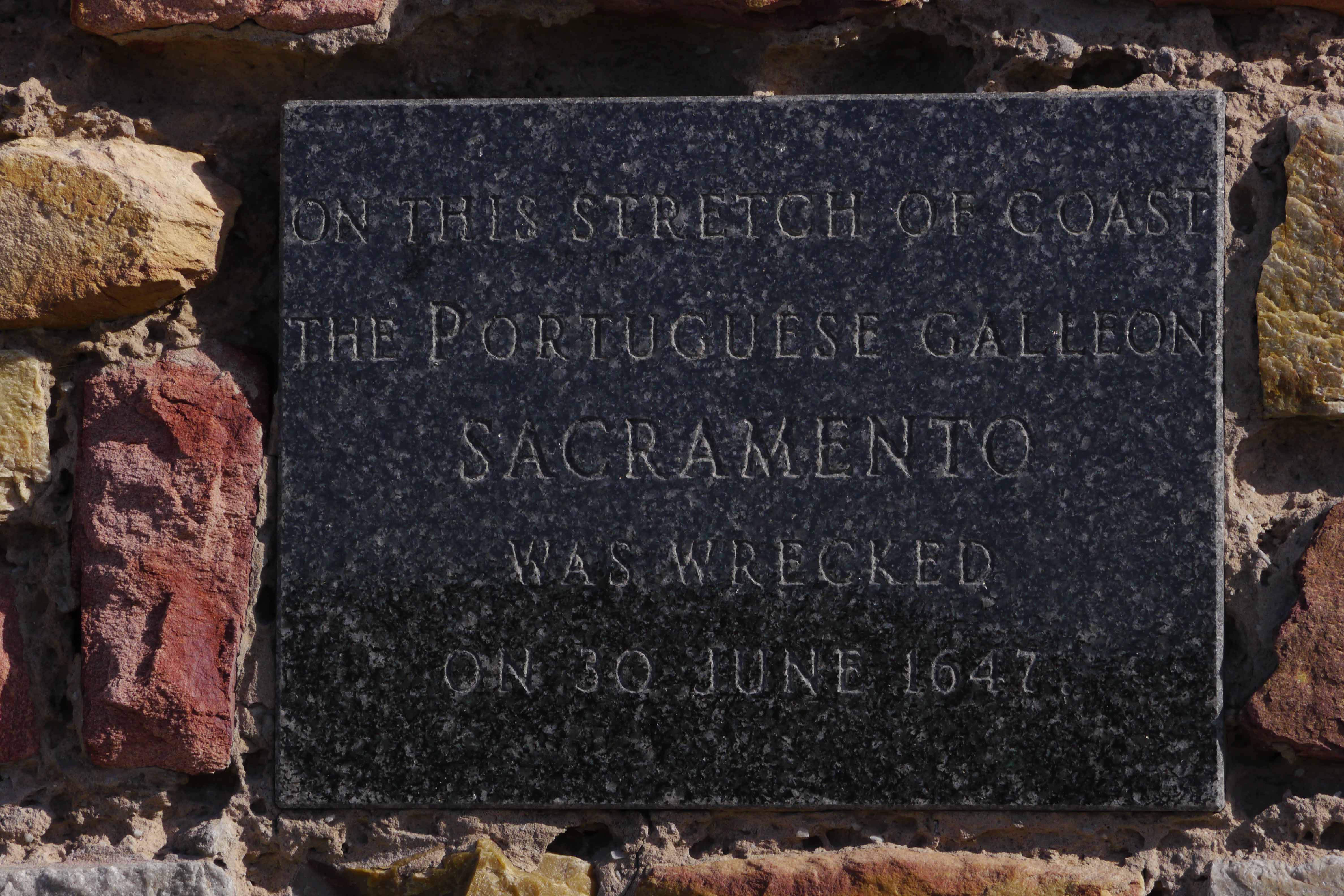
Near Sardinia Bay in 1647 the Portugese Galleon Sacramento shipwrecked in a storm.

An der Sardinia Bay erlitt 1647 die Portguisische Galleone Sacramento Schiffbruch.


Sacramento


Here is an interesting Blog-Entry about it / Ein interessanter Blog-Eintrag dazu:

http://portelizabethtimes.blogspot.com/2008/07/portuguese-galleon-runs-aground-30.html

Day 9: Terms of racism

If you wonder what a picture of a beautiful beach has to do with racism, here is the explanation: During times of apartheid King’s Beach in Port Elizabeth was the only beach people of colour were allowed to go to, separating them from the white population. Even though the beach might look beautiful it is also the one located most closely to the industrial harbour and under the entry lane of Port Elizabeth airport.

It is a segregation that until today marks the town. Not only considering the really poor living in townships but also in the better or richer parts of the city you still find areas mostly populated by whites and others they dare or like not to go. Prejudices do exists concerning for example criminality. The segregation even has its toll on language because using the wrong terms concerning peoples race an ethnic heritage can quite easily become offensive.

Speaking of the old lady in the plane again. While flying towards Johannesburg the stewardess handed out some sweets and my next seat neighbour began telling me about her childhood when she grew up next to sweet factory. Her father, the elderly lady told me, used to buy big bags of sweets for the children and brought them home. “There were these special dark coloured ones I liked very much. We called them the black…” And there she stops making a slightly embarrassed wink with her hand. “Oh”, she said, “we don’t say that anymore here.”

What to say and what not to say, how to address and how to use the right term for the right kind of people is not that easy and I still have not completely and fully grasped it.

Officially South Africa has four big ethnic groups.

First of all there is the African or black population, a culturally and linguistically non-homogenous group. Around Port Elizabeth the main population is Xhosa who originally lived at the Eastern Cape but due to working migration can today be found in other parts of South Africa as well. The Xhosa language isiXhosa has integrated parts of the San (otherwise called Bushman) language, using klicking sounds hard to pronounce for Europeans. Others are for example Zulu, Basotho, Bapedi, Venda, Tswana, Tsonga, Swazi and Ndebele. And to make it even more complicated these groups are divided again into different tribes, the main Xhosa tribes for example are Mpondo, Mpondomise, Bomvana, Xesibe and Thembu. Prominent Xhosa people are Desmond Tutu and Nelson Mandela, born to the royal Thembu family and therefore often addressed with his honorary title “madiba”.

The white population is heterogenic as well as for the different groups immigrating towards South Africa during colonization: From French Huguenots, Germans, Portuguese, Irish or Greek to British and Dutch immigrants. Until today the white population can be divided in English speaking people and Afrikaners, who speak Afrikaans, a language deriving from the 17th century Dutch and whose ancestors were Dutch Calvinist immigrants as well as Frisians and French Huguenots. For the Afrikaner population adjusting to the post apartheid era was possibly the hardest, since it was the Afrikaner National Party who after she came to power in 1948 passed the segregation laws and laid foundation to the whites supremacy at the cape. Above that the older colonial history has also to be considered when during the Boer War the Afrikaner were forced under British rule – a complicated history with a long prologue leading to British imperial troops confiding the Boer population in concentration camps in the 1880s and 1890s. About 15 per cent of the (civilian) Boer population died in these camps, especially children suffered. It is a history many Boer descendants have not forgotten. After the end of apartheid some more radical Afrikaners therefore came to the conclusion that their population were doomed by history at least twice, many of those Afrikaners who could afford it left the country.

I remember that in the early or middle 1990s at a family gathering I met distant relatives for the first time who had recently emigrated from South Africa. I do not remember much but I do know they had a dog, a German shepherd called Blondie, yes, exactly like Hitler’s dog. I don’t think I have to say more…

To come back to the ethnic diversity of South Africa next to the white and African population there is a big group of Indian and Asian immigrants who came to the cape as cheep workers. One has only to remind oneself that the movement of Mahatma Ghandi did not start in India but on the African continent. Today especially Chinese gain influence in South Africa since Chinese corporations started to invest in the local economy.

And this gives way to another phenomenon: Even under those who have lived under oppression for centuries prejudices against other ethnic groups like people from Bangladesh or India do exist and even more so against people with a mixed ethnic heritage. Coloured people born out of a relationship between for example – here you go again –white and black parents, are perhaps the lowest ranking people, not being part of either group, not really belonging anywhere.

Take for an example a man from Namibia driving through an area mostly inhabited by coloured people and Bangladeshi. Spotting six men sitting in a doorway having only a chat he says: “Ah look at them now. But close your eyes for a second and they rob you.”

Considering the melting pot of nations and heritages it does not come as a surprise that talking of terms is so complicated in South Africa. Considering that apartheid ended (only) 20 years ago it might as well not be surprising that segregation is not removed yet. Only thinking about the fall of the German wall nearly at the same time and the problems Germans still have to face speaking in terms of Eastern and Western Germans the problem of segregation and the long time it takes for people long divided to grow together to one entity is not as foreign a process as one might think in the first moment.


Day 8: Elephants again

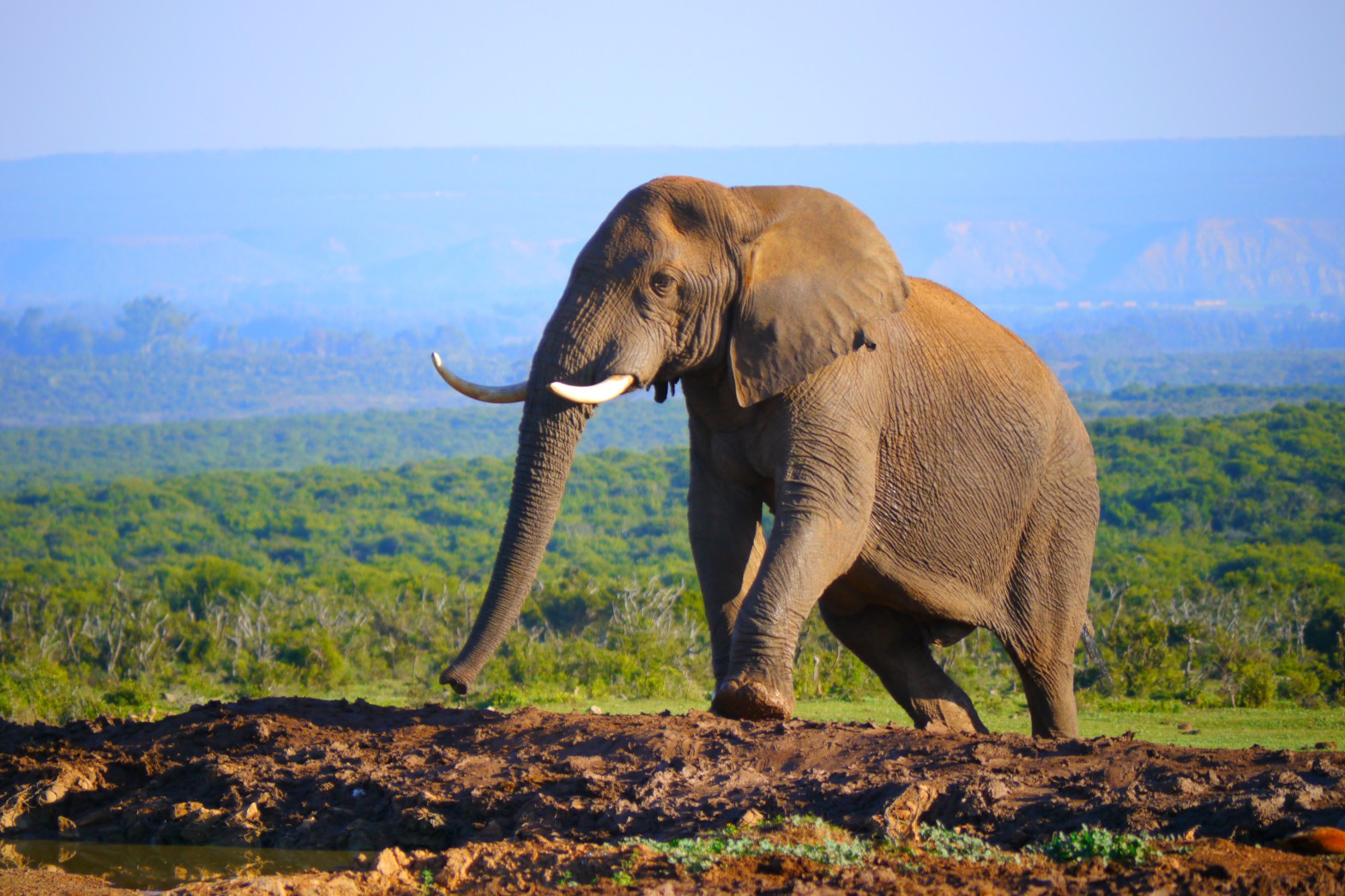
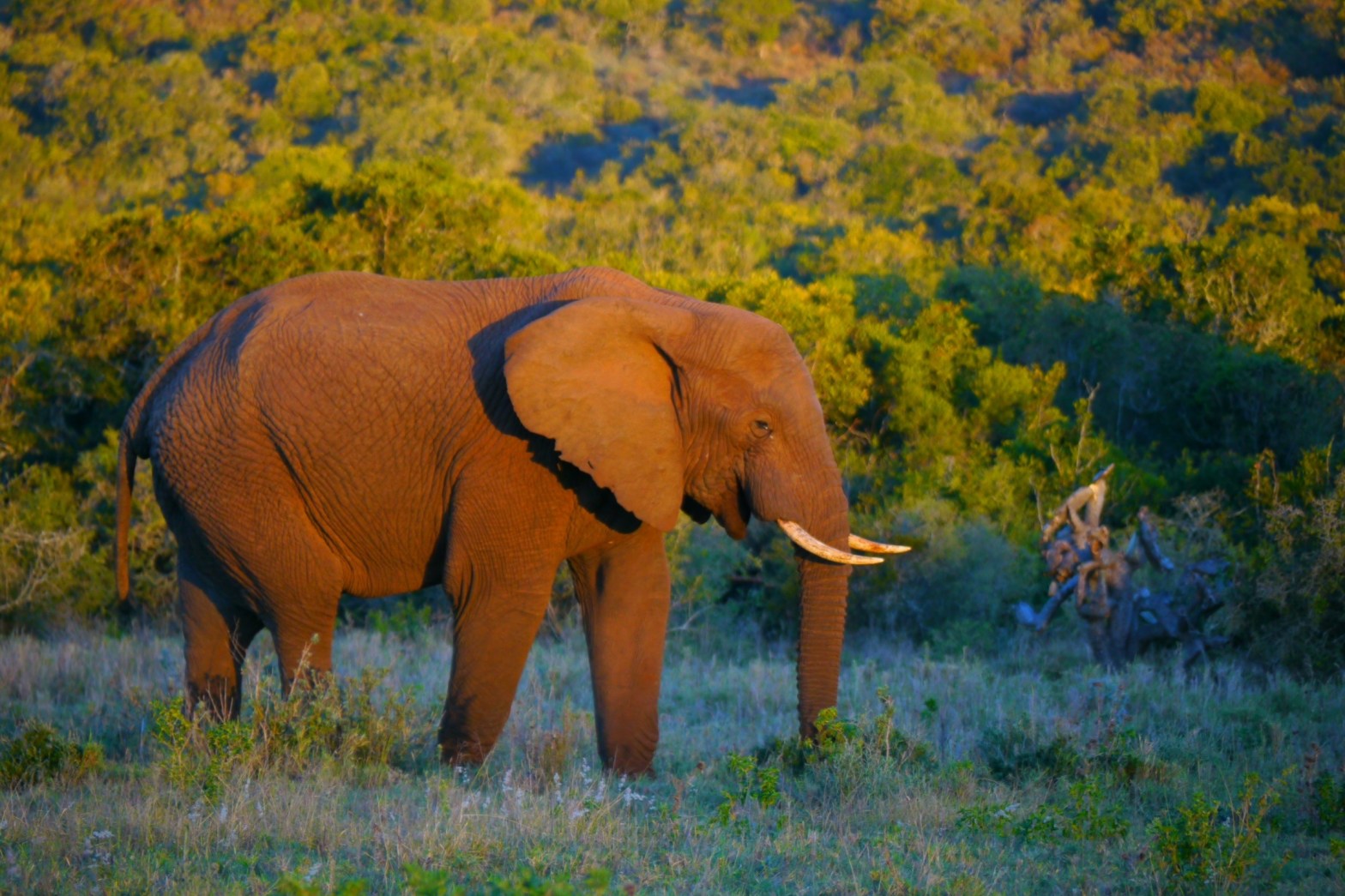
Today’s entry is actually not an new one but an update to Saturday’s pictures taken in the Addo Elephant Park. I filmed some short video sequences and only today found the time to edit the movie. Since it was the first time I used the video mode of my camera for shooting a short movie, not everything worked out that well. In some parts I am not really happy with the lightening and the focus.


—-


Der heutige Eintrag ist eigentlich nur eine Ergänzung zu den Fotos, die ich am Samstag im Addo Elephant Park gemacht habe. Ich habe zum ersten Mal wirklich den Video-Modus meiner Kamera genutzt, um einige kurze Sequenzen zu filmen. An einigen Stellen bin ich deshalb auch noch nicht wirklich zufrieden, was die Belichtung, die Farbgebung und die Schärfe angeht. Heute habe ich es aber zumindest geschafft die Sequenzen zu einem kurzen Film zusammen zu schneiden. Und immerhin: Es sind Elefanten!


Day 7: Riding the waves

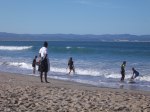
Today’s trip brought me to Jeffreys Bay, a coast town at the Eastern Cape – with not yet 15.000 inhabitants a quite small one as well. But it is very popular with surfers because the long sandy beach with its clashing waves is one of the most famous surfing areas in the world.


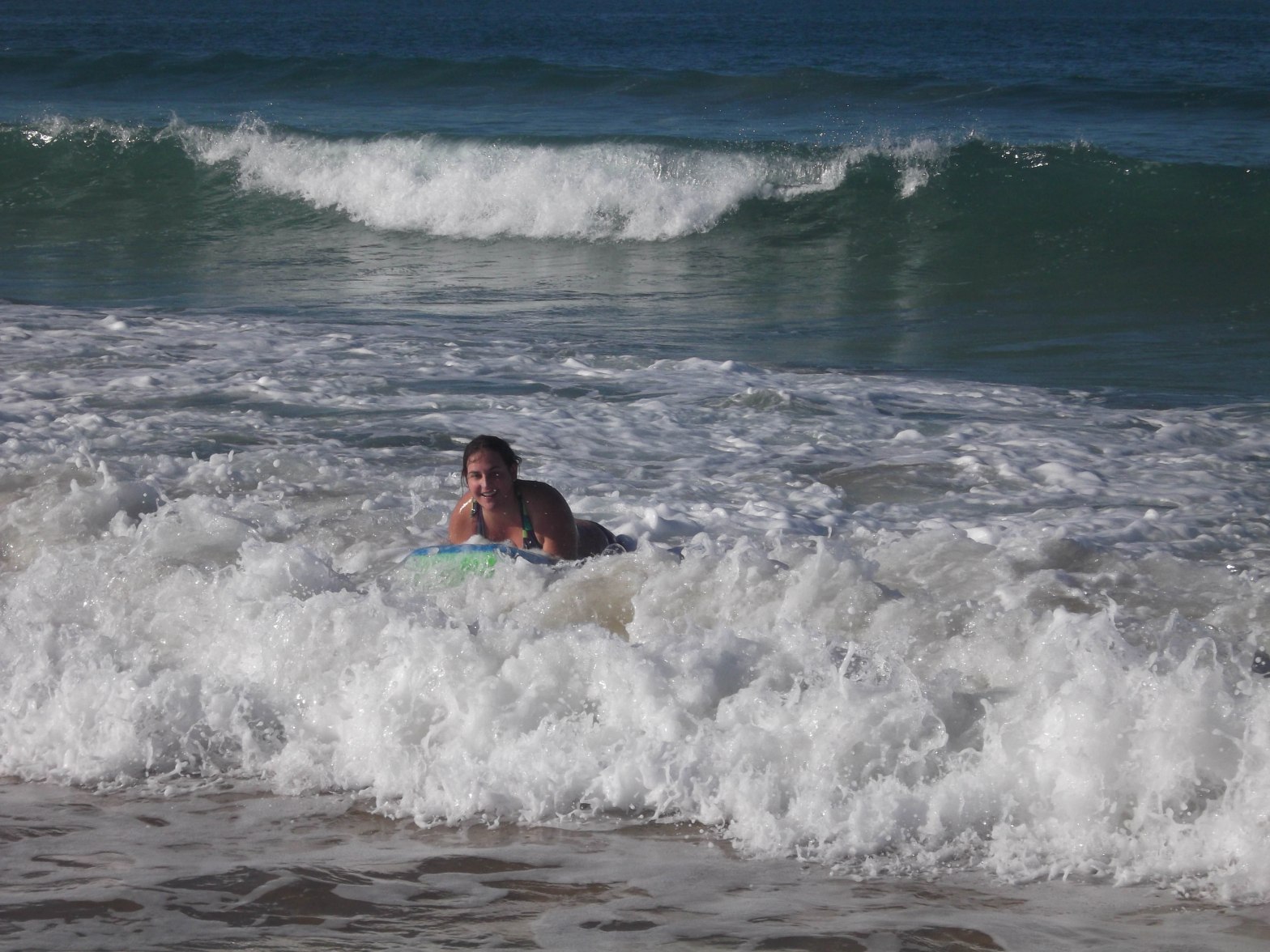
I intended to go swimming there but as soon a saw the clear blue water and the at least one and a half metre high waves another idea struck me: Since I did not have surf lessons yet (which I intend to do) I decided to buy a new bodyboard. I simply could not let go of the idea to actually ride the waves. No matter I already have a bodyboard at home in Germany, five minutes later I proudly walked towards the beach with a new one.


And fucking hell (sorry for swearing): what a great decision. It was fantastic, simply and utterly fantastic. Now I’ve got some bruises and scratches because more than once the waves kicked me off the board. But even that is an experience not to miss.


I would have liked to write more about surfing, bodyboarding and Jeffreys Bay but I have to confess: I am hungry. And there is such a nice restaurant next door…


For some impressions, look through the gallery below.


Heute hat es mich nach Jeffreys Bay verschlagen, einer Kleinstadt am Eastern Cape. Unter Surfern allerdings ist der Ort berühmt, soll es dort doch eines der weltbesten Surfreviere geben.


Eigentlich hatte ich lediglich vor am Strand zu liegen, Sonne zu tanken und Schwimmen zu gehen. Aber dann habe ich die Wellen gesehen: mindestens eineinhalb Meter hoch bevor sie brechen und an den Strand schlagen. Keine fünf Minuten später stand ich in einem der zahlreichen Surfgeschäfte und habe mir ein neues Bodyboard gekauft – Surfbrett für Arme könnte man sagen. Da ich bislang noch nicht mit einem Surfkurs angefangen habe (die Tickets liegen schon zuhause) erschien mir das die sicherere und günstigere Variante. Zwar habe ich bereits ein Bodyboard in Oldenburg stehen, aber die Wellen konnte ich mir einfach nicht entgehen lassen.
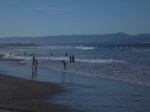
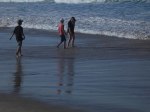
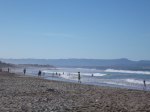
 

Richtige Entscheidung. Jetzt habe ich zwar überall Schürfwunden und blaue Flecken (wer braucht schon einen Neoprenanzug, Bikini reicht auch!), weil mich mehr als einmal die Wellen vom Bord gefegt und an den Strand gespült haben, aber ich bin auch noch nie in meinem Leben auf so großartigen Wellen geglitten.
 

Eigentlich wollte ich viel mehr schreiben über Surfsport, Bodyboards und Jeffreys Bay, aber ich muss gestehen nach stundenlang im Wasser herumspringen und paddeln bin ich fürchterlich hungrig. Und nebenan gibt es ein sehr leckeres Restaurant…


Einige Impressionen gibt es unten in der Galerie.


Day 5: Cars

If anyone had ever told me that some time I would write about cars and driving, I would have laughed and declared him or her a bit insane. But here I am doing exactly that.


Driving in South Africa for me is bit of an adventure, after three days of simple refusal yesterday at a quiet place out of town I decided I would try to drive a car on the left hand side – a rule that still exists from the days the country had been a British colony. Since I have never done that before – even though I have been to England and Malta – I expected it to be somewhat difficult, but guess what: It is not. Shifting gears with the left hand was the only thing that proved to be a bit tricky the rest I got used to after only a few minutes driving.


The car itself is another question. My boyfriend and I are currently driving a VW Citi (yes it actually writes itself like that), a car that looks as if it was constructed in the late 1980s or early 1990s but indeed was build in 2005. And so it has an interesting mixture between old and new technology. If you for example park the car and forget to put the lights out it makes a loud “beeeeeeep”, on the other hand if the engine is cold and you want to start it you have to pull a choke to regulate how much air and fuel gets into the engine.  Driving around corners always proves to be a workout for the arms since the car does not have power steering. And the passenger door only opens every third or fourth attempt making my boyfriend laugh about the little power I have in my hands until he stood in front of a closed himself for the first time without being able to pull the handle far enough to open it.


But the car has a big advantage: Nearly every mechanic knows it and it can be repaired quite easily. And that makes the car very famous in South Africa and a popular swag for thieves. Therefore the Citi we have rented has three keys: One to start the engine, one to lock the doors and one to lock the gearbox while parking. None the less it is safer to only leave it at a guarded parking lot because the locks will not stop thieves to smash the windows and steel the stereo (a simple car radio).


Driving in South Africa can prove a bit troublesome as well. First of all everyone is driving very fast, 80 km per hour where 60 are allowed at last. Stop signs are only a suggestion and if you are waiting at a red robot (means: read light) next to a police car you can be sure the cops are the first driving over the line and into the intersection while the light is still dark red. Every now and then people are running onto the street and pedestrians on the highway are absolutely normal.


Waiting at a red robot nearly every time means someone tries to sell you something: It is sunny and you are wearing sunglasses does not stop anyone trying to sell you new ones. And of course at every intersection you need new windscreen wipers, a charger for your mobile phone or bin bags.


But if you get used to all these things, driving along this wild and colourful coast is one of the most beautiful experiences you can ever have. And that was maybe the most dangerous part for me: Not staring at the clear blue waves crashing on the rocks but actually looking where I was driving. Next time, I think, I will switch over to the passenger seat again.


—–


Hätte mir irgendwer einmal gesagt, dass ich irgendwann einmal über Autos und Auto fahren schreiben würde, hätte ich wohl nur gelächelt und den Kopf geschüttelt. Nicht mein Thema. Und jetzt sitze ich vor meinem Computer und mache genau das.


Autofahren in Südafrika ist nämlich schon ein kleines Abenteuer. Und nachdem ich mich drei Tage lang schlichtweg geweigert habe, mich hinter das Steuer zu setzen, habe ich gestern meinen ganzen Mut zusammen genommen: Außerhalb der Stadt, in einer ruhigen Gegend. Schließlich bin ich dank meiner Verweigerungshaltung auch im England- und Malta-Urlaub nicht gefahren und damit war gestern mein erstes Experiment: Jessica im Linksverkehr. Ich habe eigentlich damit gerechnet, dass das wahnsinnig kompliziert ist, ist es aber gar nicht. Das einzige, mit dem ich etwas zu kämpfen hatte, war die Gangschaltung. Zum einen, weil ich mit der linken Hand nicht besonders gut schalten kann, zum anderen, weil die Gangschaltung sehr schwer geht.


Das Auto an sich ist noch einmal eine ganz andere Frage. Wir fahren derzeit einen VW Citi, ein Auto, das aussieht, als wäre es in den späten 1980er Jahren oder zu Beginn der 1990er gebaut, das aber tatsächlich aus dem Jahr 2005 stammt. Und dementsprechend hat es einen interessanten Mix aus alter und neuer Technologie. Während es einen lauten Warnton von sich gibt, sobald der Fahrer vergisst beim Einparken das Licht auszumachen, muss ein Fahrer zum Starten des kalten Motors einen Choke ziehen. Der reguliert dann wie viel Luft und Benzin in den Motor gelangt. Um die Kurve fahren oder einparken ist echtes Workout für die Arme, denn eine Servo-Lenkung gibt es nicht. Und die Beifahrertür lässt sich nur bei jedem dritten oder vierten Versuch öffnen. Mein Freund hat sich über mich lustig gemacht, dass ich wohl etwas zu schwach sei, um vernünftig am Türgriff zu ziehen. Bis er dann selbst vor der verschlossenen Tür stand.


Aber der VW Citi hat einen entscheidenden Vorteil: Es ist ein Schrauberauto, das jeder Mechaniker kennt und das deshalb an jeder Straßenecke repariert werden kann. Und im Notfall ersetzt eben die Nylonstrumpfhose den Keilriemen. Genau das macht das Auto aber auch sehr beliebt in Südafrika und eine bevorzugte Beute für Diebe. Der VW Citi, den wir gemietet haben, hat deshalb auch vier Schlüssel: Einen für die Zündung, einen für die Türen und mit dem dritten lässt sich die Gangschaltung abschließen. Trotzdem sollte man in Südafrika besser nur auf bewachten Parkplätzen parken, denn all das hält Diebe nicht davon ab, einfach die Scheibe einzuschlagen und das Autoradio zu klauen.


Autofahren an sich ist in Südafrika auch so eine Sache. Grundsätzlich fährt jeder zu schnell, etwa 80 km/h wo 60 erlaubt sind und Stopp-Schilder sind eher ein Vorschlag, denn ein Muss. Und wer an einer roten Ampel neben einem Polizeiauto wartet, der kann mit ziemlicher Sicherheit davon ausgehen, dass der Polizist als erster noch bei Rot in die Kreuzung rollt. Auch laufen Menschen gerne einfach auf die Straße und Fußgänger auf der Autobahn sind völlig normal – auf dem Seitenstreifen, aber auch auf der Fahrbahn.


Ampeln sind in Südafrika gleichzeitig Verkaufsstände: Sonnenbrillen, Handy-Ladegeräte, Scheibenwischer oder Müllsäcke – bei Rot klopft garantiert jemand ans Fenster. Manchmal auch um einfach nur zu betteln.


Hat man sich daran aber gewöhnt, gibt es kaum etwas Schöneres als entlang von Felsen und Sandstränden auf der Küstenstraße zu fahren. Und das war gefährlicher für mich als alles andere: Nicht ständig auf die azurblauen Wellen zu starren, sondern tatsächlich auf den Straßenverkehr zu achten, war eine wirkliche Herausforderung. Das nächste Mal werde ich wohl wieder meinem Freund die Schlüssel in die Hand drücken und mit unschuldigem Blick grinsend auf die Beifahrerseite rücken.