Day 42: Elephant cuteness and lions

Second time in the Addo Elephant Park: (Baby) Elephants were walking around the car on the road and I finally saw two lions.

Zum zweiten Mal im Addo Elephant Park: Eine Herde von mehr als dreißig Elefanten ist auf der Straße direkt am Auto vorbei gelaufen und endlich habe ich auch zwei Löwen gesehen.


Baby Elephants


Two Lions


More elephants and lots of other wildlife

Day 41: Whale watching without whales

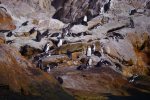
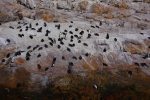
Today we took a boat trip to watch whales in the Algoa Bay, but even though this time of the year the Southern right whales are frequently seen in this area, we were out of luck: No whales today. Instead we got some dolphins and lots of penguins.

Heute haben wir einen Bootsausflug in die Algoa Bay gemacht, um Wale zu gucken. Wale sind dort in dieser Jahreszeit oft zu sehen, die Weibchen des Südlichen Glattwals oder Südkapers bekommen dort ihre Jungen. Und auch als Futterplatz ist die Bucht beliebt. Dennoch hatten wir heute kein Glück: Keine Wale – dafür aber Delphine und jede Menge Pinguine.


Dolphins


Penguins


Day 40: White men talking

One of the things I still find quite strange in South Africa is the way some white people are talking. Yes, of course, Germans or Brits or French are often full of prejudices as well but I have seldom seen that in such an open display as in South Africa. Sometimes when white people are speaking about or even with Africans it seems even after all these years they have not realized that the times of oppression and Apartheid have passed since 20 years.


About one example I have already written. When a beggar in Graaff-Reinet asked me and my boyfriend for money to buy electricity all of a sudden a white Afrikaans speaking women started shouting at him until he left us in peace. I was quite dumbstruck by that.


The second memorable time was on my trip to Cape Town while talking to a white man with German origin who had lived in South Africa since the 1990s and therefore moved here after the country became a democracy with equal rights and equal voice in election – one man, one vote. He was quite a nice fellow but when he told me about his life in South Africa some things he said left me quite speechless. Literally. I did not want to be rude and therefoer I simply tried to change the subject – which did not work well. And so he told us about the African staff he had to work with that never did anything according to his wishes, worked slowly or lax, were late or left early and – so his conclusion – were therefore simply lazy. And while he said that – all the time hinting the staff was very nice and he liked them as people – my thoughts were running wild: Would I work hard and overtime when I was paid so badly like for example the mentioned housekeeping staff? Would I be motivated to work when I live in rags to make others live in riches? I think not. Not to mention that some Germans tend to overdramatize (the Greek or Italian or everyone working less than 8 hours a day and do overtime without being asked to do so is lazy as well, right?) or expect everyone to be as accurate as they have learned to be in their childhood – that is more so the case wit the older generation. Ok, now I might overdramatize a bit…


To come back to what I intended to tell about. He gave the example of one employee who could not read the clock properly and did not know that a minute contains of 60 seconds. This does not struck me that strange since lately I have been reading about the school system during Apartheid and the so called Bantu educational system where Africans were simply refused a proper education. My boyfriend currently works at a South African university and two of his colleagues had warned him not to expect to much of some of his Master students. Many of them had made their Bachelor degree in the 1980s and have worked since than and only recently came back to university to gain a Master degree. They also were victims of a system that refused Africans a proper education with the consequence that they still today have a profound lack of knowledge.


One good thing the German had to say about the Africans: They are so good at art, not only music and dancing, but every form of art. Such great artists.


The funny thing is that I could see him interact with his African staff and had he not told me these things beforehand, I would have never guessed that he could have that kind of thoughts.


Something that was completely different the last time I witnessed white men, in this case women, talking. It was in a café not far from my flat where I sat drinking coffee some days ago in the afternoon. At the next table sat two elderly ladies who were served by an African waitress asking her questions about the different dishes. She excused herself that she was new and could not answer all the questions and would fetch a colleague. And the moment she started to walk away one of the women snapped at her in a intonation that was not anywhere near rude but simply like some slaver speaking to his slave: “Miss, you cannot walk away like this. Come back this instance. We were ordering.” The young waitress was quite flustered, excused herself once again and for that only earned a “Huff!”.


Approximately half an hour later there was the next incident. The café is situated at a place that overlooks the sea and is surrounded by cafés and restaurants. Normally there is not even security around, but this day it was. An African security man. And again the same lady used that voice to call. “Security! Security!” And as the man asked what was the matter, with waving hands and disapproving face she gestured at a clearly poorly dressed man walking around the small square. “What is he doing there?” She demanded answer. “Is he allowed to be here?” The security man answered so quietly I could not understand what he said but the next moment walked towards the other man to make an inquiry. And I sat there simply dumbfounded and speechless again. But my mind was screaming: “Shut up bitch! If you believe it or not South Africa is a free country and the man can walk where he likes. If you don’t like it: Piss off!” Sorry for swearing.


Why I did not say that into her face? The scene passed so fast and was so unexpected my mind really was overwhelmed to process such behaviour. And on the other hand: I am simply not a rude person.


And what in the end struck me most: Not once in this nearly six weeks I have yet been in South Africa have I met an African who was not polite and nice, most are rather cheerful and greet you back with a smile. Perhaps some white people should start thinking about that.


Day 39: Boats in the rain

When fishing boats lay at anchor in the bay it is always the first sign for bad weather, wind and waves approaching. Today it often rains so heavy that the boats one after another disappear behind a grey curtain.

The pictures are taken at different stages of rain – sometimes heavy, sometimes a bit more light – using different filters. Some are black and white, some are in colours, but I think all of them carry a bit of the tristesse of a rainy day.

Es ist immer eines der ersten Anzeichen für schlechtes Wetter, Wellen und Wind, wenn die Fischerboote in der Bucht vor Port Elizabeth vor Anker gehen. Heute regnet es teilweise so heftig, das die Boote eines nach dem anderen hinter einem grauen Regenschleier verschwinden.

Die Fotos sind zu unterschiedlichen Regenphasen aufgenommen – manche bei Starkregen, andere bei leichterem Nieselregen – und für die Aufnahmen habe ich verschiedene Filter benutzt. Einige sind schwarz-weiß, andere in Farbe, aber nichtsdesto trotz tragen sie alle ein wenig die Tristesse eines Regentages in sich.


Day 38: Burning waste

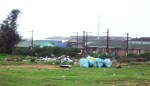
Since yesterday morning a stench of burned plastic and rubber is lingering over the town, which gets stronger every time the wind blows from the inland and not the sea. Even though I tried, I did not find the source but there is a good chance the smell results from burning waste.


Waste is one of the biggest problems of South Africa, especially plastic waste. Plastic is nearly everywhere: From supermarket bags to coke bottles, from plastic wrapper to oil cans. In the richer and well-groomed parts of Port Elizabeth the streets, gardens and places are clean, wastebaskets carry the signs “Thank you for not littering”. The problem lies in the poorer parts of town, especially the townships are live-in waste dumps. In most townships there is no municipal waste collection or garbage disposal, the waste is thrown on the street or unofficial and illegal dumps next to the houses. Plastic bags are flying around, those who are caught in trees and bushes are often called African flowers.


Often enough the illegal waste is catching fire – due to natural heat, sunlight breaking in glass bottles or human intervention, since there is no other possibility to get rid of it than burning it. It is something that would be deemed impossible in Europe. The burning plastic does not only cause a terrible stench but dangerous and unhealthy fumes as well.


Since there is no municipal waste system in townships social projects are often the only solution for the waste problem. Driving past a township now and then you can see people in yellow high visibility vests collecting waste. A student if mine in Oldenburg, who had been on an exchange in Port Elizabeth, wrote an article about one of these projects in the Walmer-Township in Port Elizabeth.


German Article “Zukunftsperspektive Müll”


http://gemuesefischen.wordpress.com/2013/06/15/all-of-us-benefit-zukunftsperspektive-mull/


While this project has gained the permission of the local government to collect waste, the municipalities in many parts of South Africa try to ban so called illegal waste picking. A number of poor people make a living in collecting garbage not only on the roads but also at municipality landfill sites to sell it on for recycling, which is not only a way to support themselves but could also be seen as an impact on sustainable waste management.


Seit gestern Vormittag hängt ein beißender Geruch nach verbranntem Plastik und Gummi über der Stadt – insbesondere, wenn der Wind aus dem Landesinneren weht. Die Quelle des Gestanks habe ich trotz intensiver Internet- und Nachrichtenrecherche noch immer nicht heraus gefunden, aber die Chancen stehen gut, dass brennender Müll die Ursache ist.


Müll ist eines der größten Probleme Südafrikas, ganz besonders Plastikmüll. Plastik ist nahezu überall: von Einkaufstüten über leere Cola-Flaschen und Plastikverpackungen bis hin zu alten Ölflaschen. In den reicheren und gut gepflegten Stadtteilen ist das Problem gering, da es dort eine Müllabfuhr gibt und alle paar Meter ein Abfalleimer auf dem Bürgersteig steht mit dem Hinweis, Müll bitte nicht einfach auf die Straße zu werfen. In den ärmeren Stadtgebieten und insbesondere in den Townships sieht die Situation schon anders aus. Vor allem viele Townships gleichen eher einer bewohnten Müllhalde, denn einer Wohnsiedlung. Ein Abfallverwertungssystem gibt es nicht, Verpackungen und organische Abfälle werden gleichermaßen auf die Straße geschmissen oder auf einen der illegalen Müllhaufen neben den Häusern. Plastiktüten fliegen vom Wind aufgewirbelt durch die Luft, jene, die sich in Bäumen und Sträuchern verfangen, nennt man auch „African Flowers“, afrikanische Blüten.


Oft genug fängt dieser illegale Müll Feuer – durch natürliche Erhitzungsprozesse im Inneren der Müllhaufen, durch Sonnenlicht, das sich in Glasflaschen bricht und immer wieder auch, weil Menschen die Haufen anzünden. Feuer ist schlichtweg die einzige Möglichkeit den Abfall loszuwerden. Das verursacht allerdings nicht nur einen beißenden Gestank, der fast täglich über den Townships hängt, sondern auch giftige Dämpfe durch verbrennendes Plastik, Gummi oder Rückstände von Chemikalien.


Da es an kommunaler Müllentsorgung mangelt, übernehmen die Müllentsorgung häufig private Initiativen und soziale Projekte. Wer durch einen Township fährt oder läuft sieht hin und wieder Gruppen von Menschen mit gelben Warnwesten und Mülltüten, die den Abfall aufsammeln. Eine meiner Oldenburger Studentinnen hat während ihres Studienaufenthalts in Port Elizabeth einen Artikel über eine solche Initiative im Walmer-Township geschrieben:


http://gemuesefischen.wordpress.com/2013/06/15/all-of-us-benefit-zukunftsperspektive-mull/


Während dieses Projekt eine offizielle Genehmigung der Stadt erhalten hat, gibt es auch sogenannte illegale Müllsammler. Teile der armen Bevölkerung verdienen sich ihren Lebensunterhalt indem sie nicht nur auf den Straßen, sondern besonders auf den Müllkippen der Städte Abfälle sammeln und an Recyclingbetriebe weiterverkaufen. Die Armen verkaufen also den Müll der Reichen. Nicht in allen Städten wird das gerne gesehen. Doch verschafft das illegale Müllsammeln nicht nur den Sammlern einen Lebensunterhalt, man kann es auch als einen Beitrag zu einem nachhaltigeren Umweltmanagement sehen – denn ein wirkliches Recyclingkonzept gibt es in Südafrika bislang nicht.

Day 37: Waves and bad weather

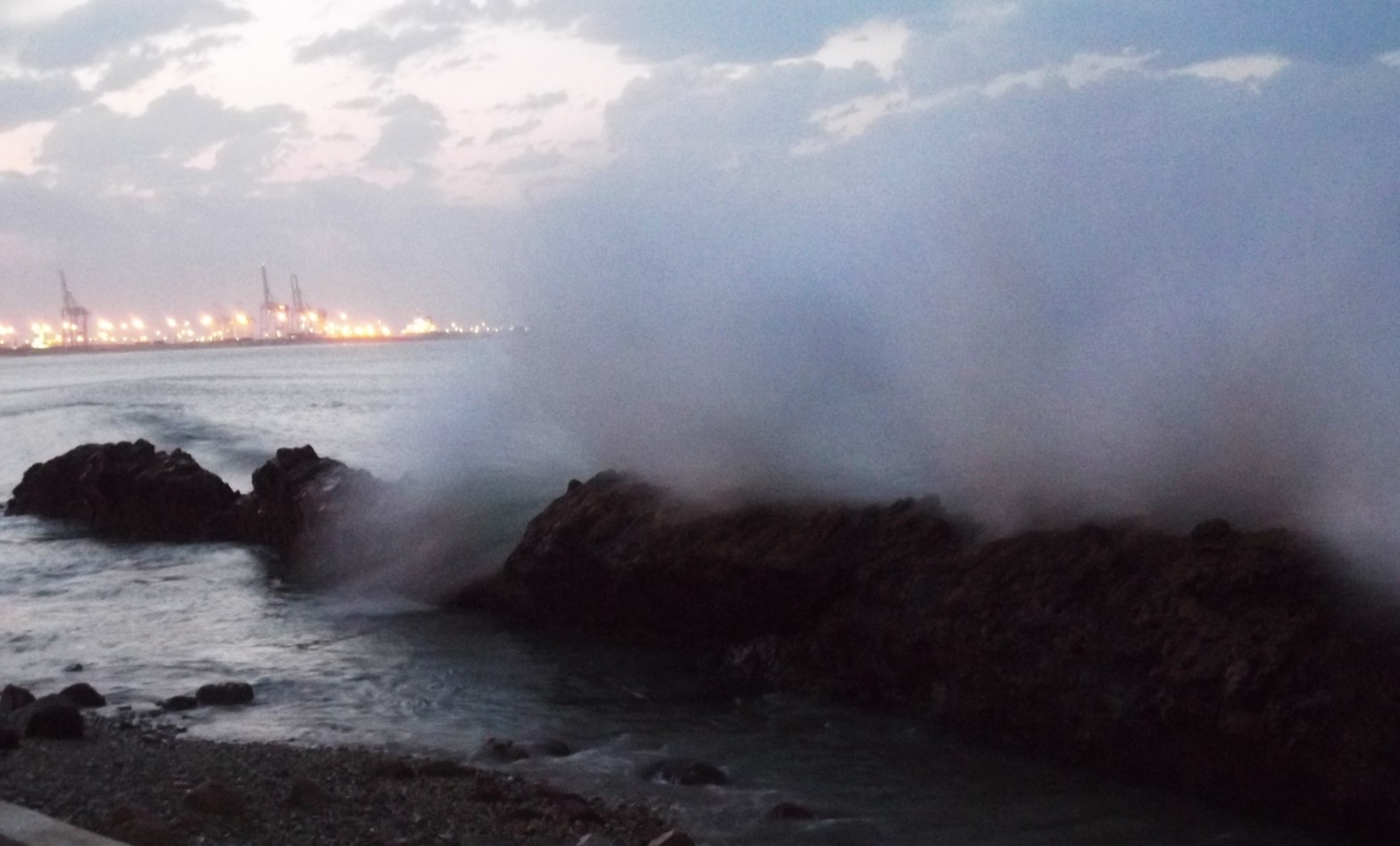
The last days have been extraordinary warm for this time of the year. But now bad weather is approaching from the west: lower temperatures of about 14 degrees on mid-day, wind and rain – that is what to expect at least for the next three days. Even though today it was still warm the waves in the evening were the first sign of changing weather.

In den vergangenen Tagen war es ungewöhnlich warm für diese Jahreszeit in Südafrika. Aber jetzt zieht schlechtes Wetter auf: Zumindest für die nächsten drei Tage sind niedrigere Temperaturen von rund 14 Grad am Mittag, Regen und Wind vorher gesagt. Heute war es noch sonnig und warm und das erste Anzeichen für die Wetteränderung lag nicht in der Luft, sondern im Wasser: in den Wellen.


Day 36: Robben Island revisited – the ferry trip

The trip to Robben Island for today’s tourist is a comfortable one, in a modern ferry with two indoor decks and one outdoor deck on the top, with a bar, restrooms and staff attending to the needs. And even though the trip can be quite rocky when the sea is bumpy with two meters high waves, like this video shows:

Für heutige Touristen ist die Fahrt nach Robben Island ziemlich komfortabel. Die moderne Fähre hat zwei Innendecks und ein Panoramadeck auf dem Dach, es gibt Toiletten und einen kleinen Kiosk – und natürlich Bootspersonal. Trotzdem kann die Überfahrt ziemlich ungemütlich werden, wenn die See unruhig ist und die zwei Meter hohen Wellen den Katamaran durchschütteln. Hier ein Video von meiner Überfahrt – die einzige an dem Tag. Das Wetter war einfach zu schlecht.


Now imagine to be brought to the island as a political prisoner in a boat like this:

Und nun stelle man sich einmal vor, als politischer Häftling zwangsweise mit solch einem Boot übergesetzt zu werden:


Robben Island


„The docks at Cape Town were swarming with armed police and plain-clothed officials. We had to stand, still chained, in the hold of the wooden ferry, which was difficult as the ship rocked in the swells off the coast. A small porthole above was the only source of light and air. The porthole served another purpose as well: the warders enjoyed urinating on us from above. It was still light when we were led on deck and we saw the island for the first time. Green and beautiful, it looked more like a reserve than a prison. (…) We were met by a group of burly white warders shouting: ‘Dis die Eiland! Hier gaan jule vrek!’ (‘This is the island. Here you will die!’).”

Nelson Mandela: „Long walk to freedom”

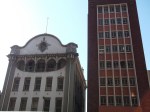
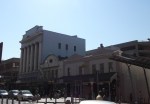
Day 34: Port Elizabeth City Centre

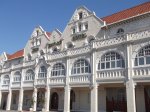
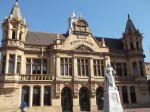
King Edward Hotel (1908)


Donkin Reserve

Lighthouse from 1861/ Leuchtturm von 1861

The pyramid was built by Sir Rufane Donkin in memory of his wife Elizabeth who had died of a fever aged 28 and gave the city its name.

Sir Rufane Donkin baute die Pyramide in Erinnerung an seine Frau Elizabeth, die im Alter von gerade einmal 28 Jahren an einem Fieber starb. Sie ist die Namensgeberin der Stadt.


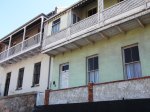
Donkin Street Houses

Most of them empty and in a bad shape. / Viele von ihnen stehen leer und sind in einem schlechten Zustand.


Mbeki Avenue – the main road


Day 33: Cape Town revisited – Slave Lodge

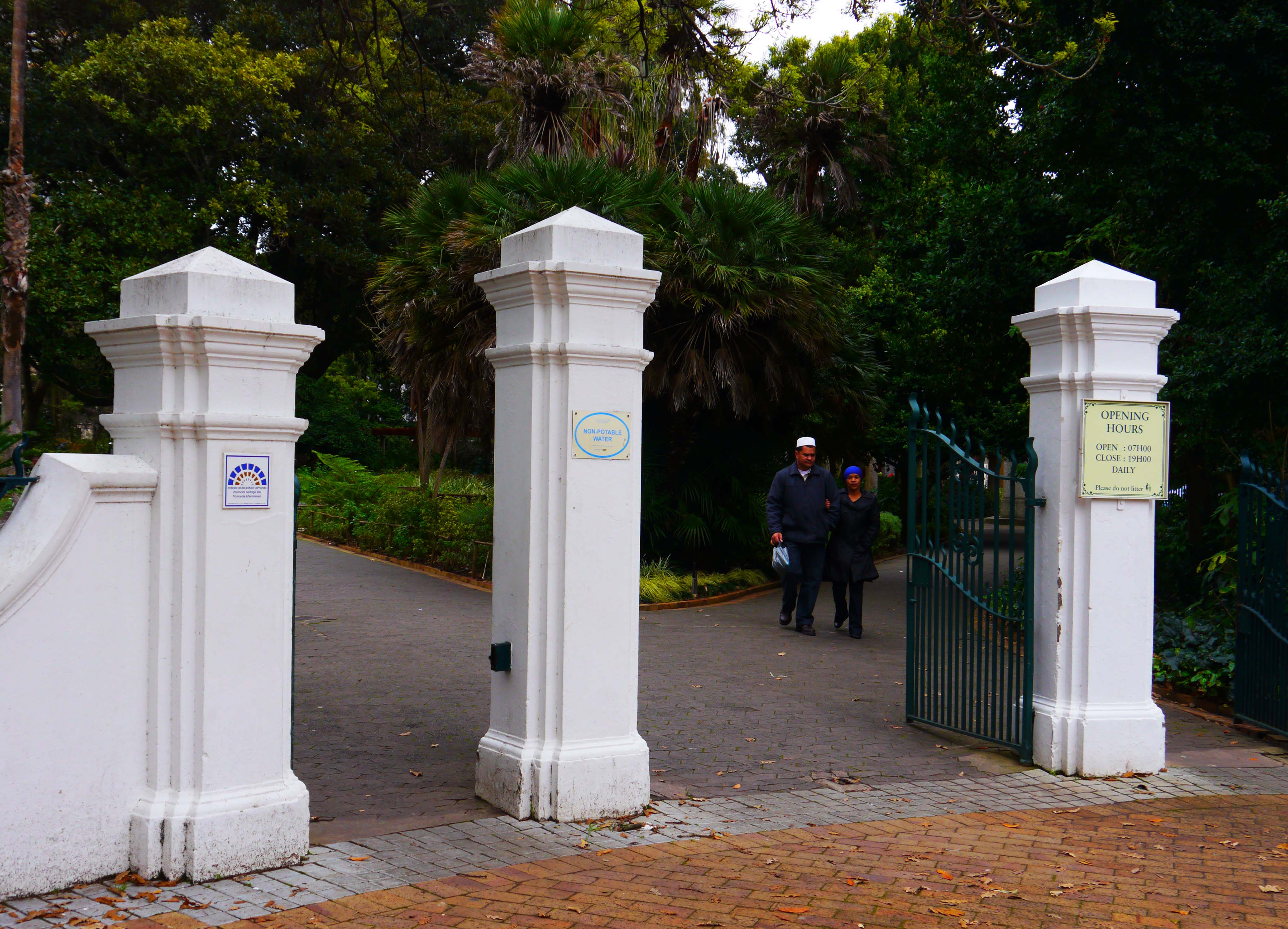
When visiting Cape Town I actually did a small museum tour about which I have still not written until today. One of the smaller but none the less impressive museums is the old Slave Lodge situated directly next to the Company Garden in the city centre.


Company Garden

Company Garden

Company Garden


The various names the building had in the last centuries reflect its very different uses: Slave Lodge, Government Offices Building, Old Supreme Court, and SA Cultural History Museum. In 1996 it was renamed to its original name: Slave Lodge.


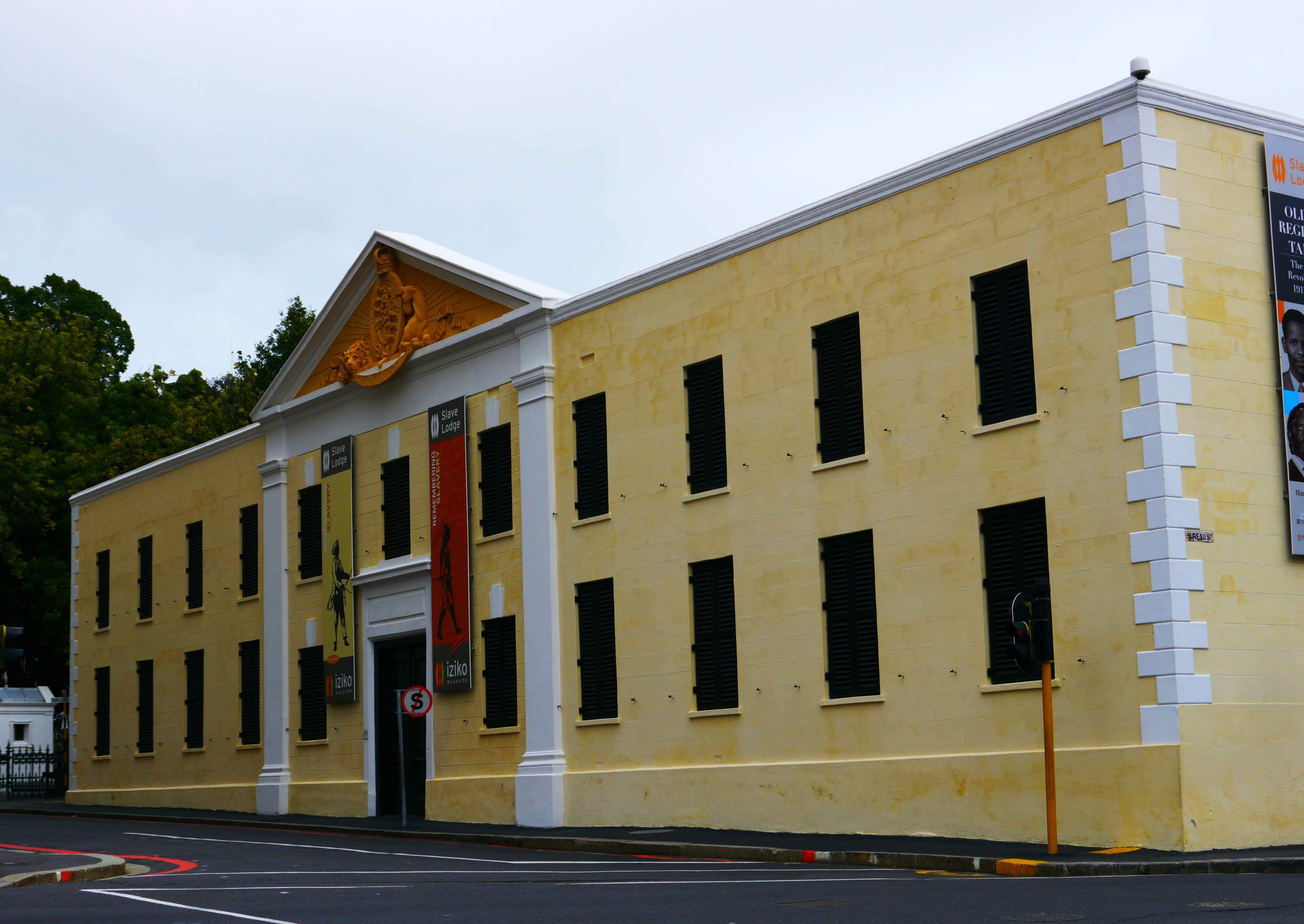
The old Slave Lodge is a square building painted in a faint and light yellow colour. Its exterior today tells more of its later use as a government and court building than of its earlier purpose as the housing for the slaves of the Dutch East India Company.


Slave Lodge
Slave Lodge


While the upper floors exhibit for example jewellery, porcelain tableware or early Chinese ceramics, the lower floor is dedicated to the long history of slavery in South Africa – an exhibition that brings to life the painful suffering of slaves in the former very centre of slave trade and slave work in the Dutch colony.


After their arrival at the southern part of the continent the Dutch settlers very early came to the understanding that they could not build a colony at the Cape without the support of slaves. And while in the beginning they depended on the help of native settlers in the cape region and therefore could not force them to slave labour (something that changed later) they started to import slaves from other parts of the African continent – and not only from there. When thinking of slave trade many do only imagine slave ships leaving from Africa towards America or Caribbean Islands, but actually many slaves working in South Africa came from India, Malaysia or Indonesia.


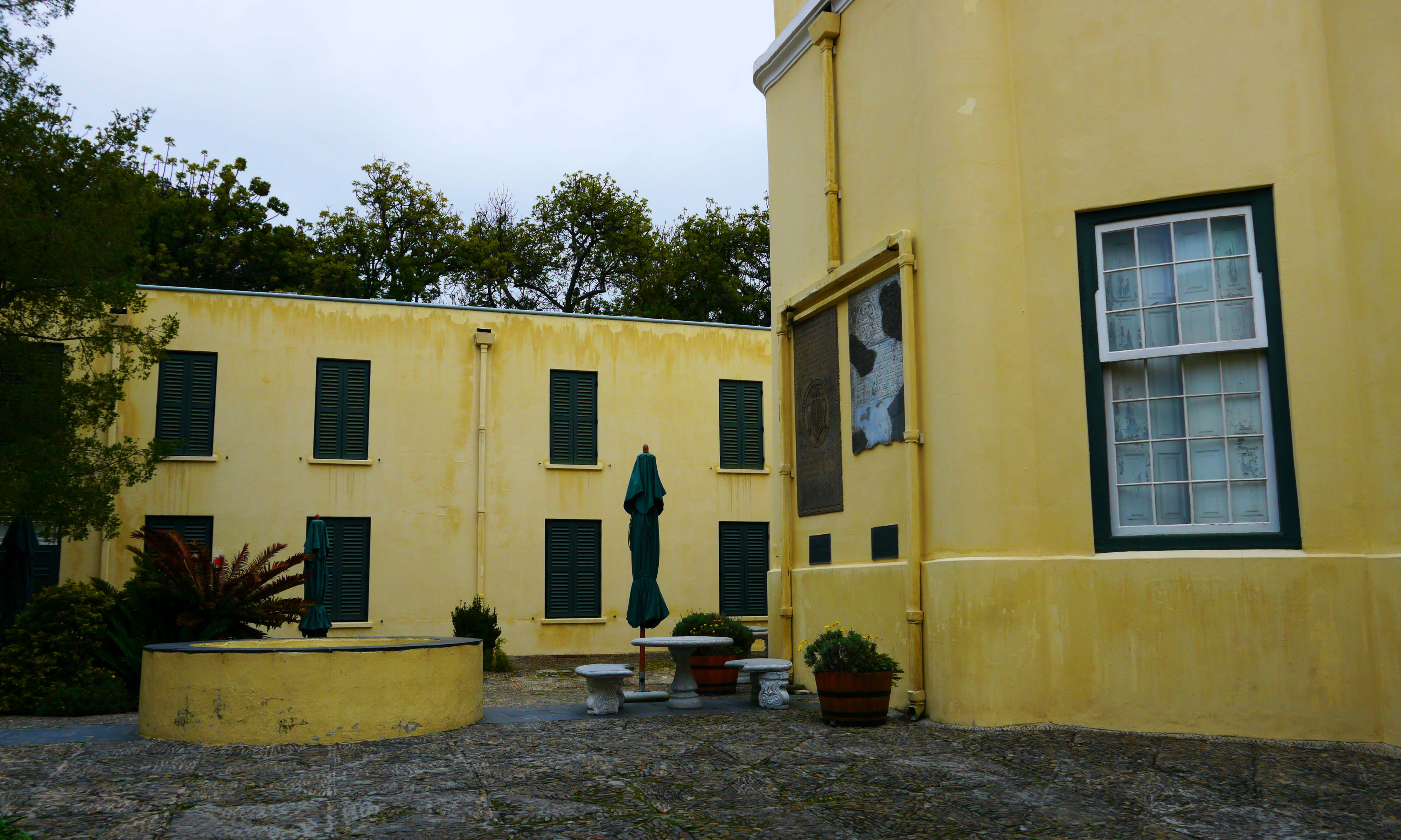
Those slaves who where not sold to farms in the inner country or to private owners in town often worked directly for the company and were housed in the Slave Lodge. The square building during that time did not have any windows to the outside, opening up only towards an inner courtyard.


Inner Courtyard

Inner Courtyard


Even during the day the inside of the Slave Lodge was so dark that without a lantern one had to guess ones way. The conditions were horrible, not only because of the darkness, but also because far too many slaves lived on far to few space. Many died in the first weeks in the lodge – from malnutrition, exhaustion or illness.  Those who disobeyed faced terrible punishments raging from flogging to death. Slaves trying to run away were often cut the skin from their foot soles.


Later, after the English took over the colony and abandoned slavery, the building was reconstructed, windows, new rooms and floors were added making it hard to imagine the conditions the slaves have worked and lived in.


Today
Inner Courtyard


Even though the museum is still work in progress as new exhibitions are planned for the upper floor, especially the 20 minute introduction video and those parts of the exhibition which refer to the Slave Lodge itself are not only informative but also a from of remembrance. The museum is dedicated to a part of South Africa’s history that some might like to forget. It is not only as a documentary but also as a memory.


Meinen Besuch in Kapstadt habe ich nicht nur zum Sightseeing genutzt, sondern auch für eine kleine Tour durch Museen, über die ich bislang noch nicht geschrieben habe. Etwas, das ich hiermit nachhole.


Ein kleineres Museum, das in meinem Reiseführer sogar nur als Randnotiz vermerkt ist, hat mich mit am meisten beeindruckt: Die alte Slave Lodge, die Unterkunft für Sklaven der Niederländischen Ostindien Kompanie mitten im Zentrum von Kapstadt.


Direkt neben dem heute öffentlich zugänglichen Garten der Kompanie gelegen, erinnert die hellgelbe Fassade mit dem großen Eingangsportal eher an die spätere Nutzung der Slave Lodge als Verwaltungs- und Gerichtsgebäude, dann an den ursprünglichen Zweck.


Bereits kurz nach Ankunft der ersten niederländischen Siedler am Kap gelangten diese zu der Überzeugung, dass sie eine Kolonie dort nur mit Hilfe von Sklaven würden aufrecht erhalten können. Und da die Siedler zumindest zu diesem Zeitpunkt noch auf die Erfahrung und Unterstützung der einheimischen Bevölkerung in Sachen Viehhaltung angewiesen waren, begann die Niederländische Ostindien Kompanie Sklaven aus anderen Teilen Afrikas einzuführen – und nicht nur von dort.


Gerade wer an die Sklavenschiffe nach Amerika und in die Karibik denkt, hat oft das Bild afrikanischer Sklaven vor Augen. Doch viele Sklaven in Kapstadt kamen aus Indien, Malaysia oder Indonesien. Sklaven, die nicht auf Landsitze im Binnenland oder an Privatbesitzer in der Stadt verkauft wurde, musste oft direkt für die Kompanie in Kapstadt arbeiten. Und diese Sklaven lebten in der Slave Lodge.


Angesichts des heutigen Grundrisses fällt es schwer sich die Zustände im 17. Jahrhundert vorzustellen: An der Außenseite gab es keine Fenster, das Gebäude öffnete sich allein zu Innenhof und selbst da waren die Fenster nur so groß wie Schießscharten. Im Gebäude selbst war es selbst tagsüber stockdunkel, die Sklaven hausten auf engem Raum, oft so viele in einem Verschlag, dass sie sich zum Schlafen nicht einmal hinlegen konnten. Die Belüftung war schlecht, die Luft stickig und faul. Viele Sklaven starben bereits in den ersten Wochen – an Unterernährung, Erschöpfung, Krankheit. Der Nachschub an billigen Arbeitskräften aus anderen Teilen der Welt und des Kontinents ging nie aus und so bestand für die Kompanie kein Grund für bessere Verhältnisse zu sorgen.


Wer sich widersetzte oder nach Auffassung der Herren schlechte Arbeit leistete, dem drohten harte Strafen: Von Peitschenschlägen bis hin zur Todesstrafe. Slave zum Beispiel, die versuchten wegzulaufen, wurde oft die Haut von den Fußsohlen geschnitten.


Das Slave Lodge Museum wird in vielen Teilen gerade noch neu gestaltet, insbesondere die oberen Etagen, in denen derzeit zum Beispiel Schmuck oder altes chinesisches Porzellan ausgestellt ist. Doch gerade jene Teile, die nicht nur die Geschichte der Sklaverei in Südafrika, sondern die der Slave Lodge erzählen, sind nicht nur informativ, sondern auch eine Form der Erinnerung.  Und das ist tatsächlich Teil des musealen Selbstverständnisses: Nicht nur informieren, sondern auch der Sklaven zu gedenken, deren Geschichte bis heute Teil des kulturellen Erbes Südafrikas ist.